Siding Replacement Done Right - The Prep Work That Matters
When siding starts to fail, most people think about the look first. Faded panels, warped boards, cracks along the edges. But the bigger issue is what's happening underneath. Moisture gets in. Wind finds the gaps. Over time, that wear adds up and the damage goes deeper than the surface.
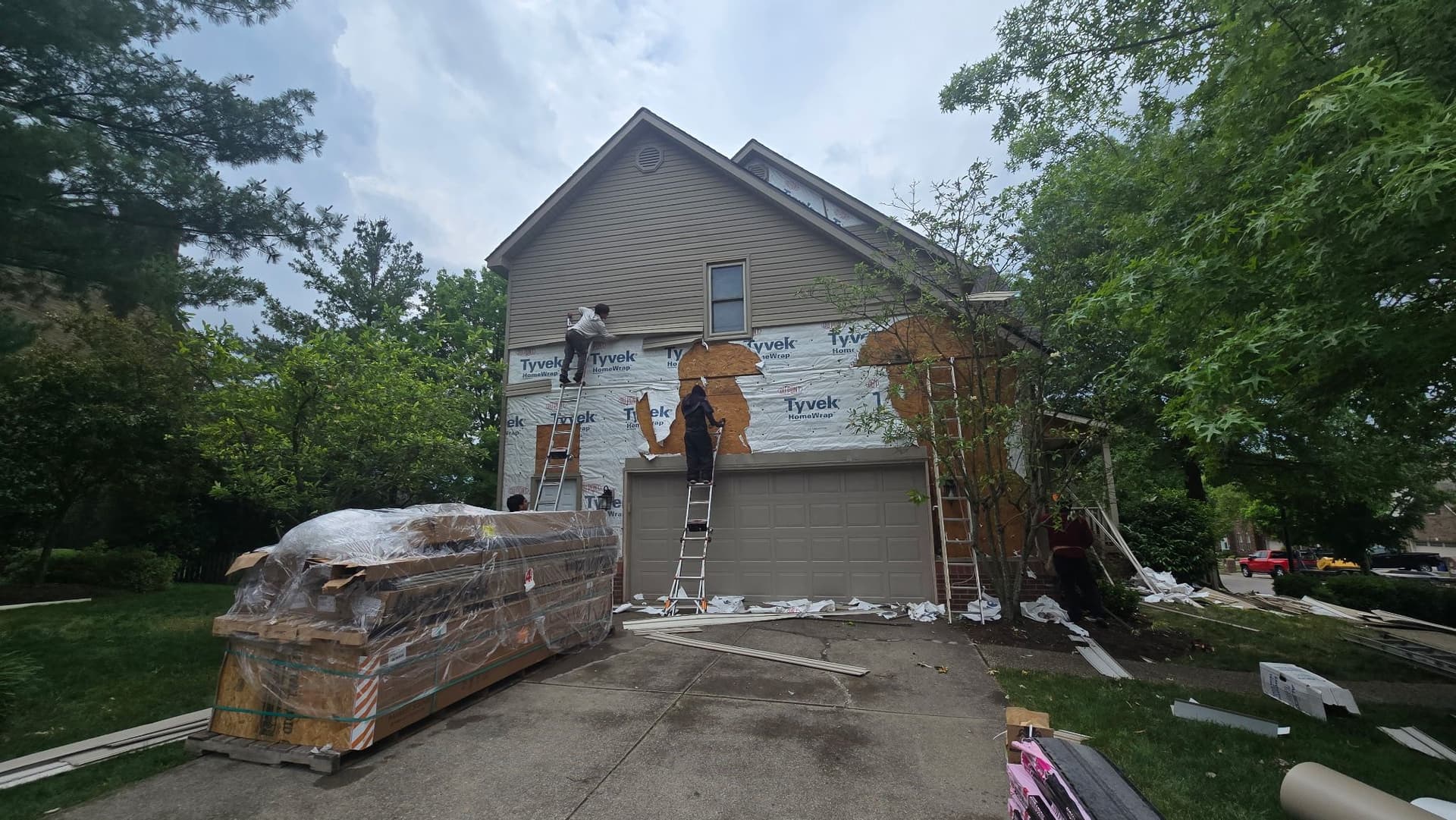
This is the kind of job where the prep work is everything. Before any new siding goes on, the old material comes completely off. That means the wall is fully exposed - sheathing, framing, all of it. We get a real look at what's actually going on behind the surface, and that matters. You can't just cover up problems and call it done.
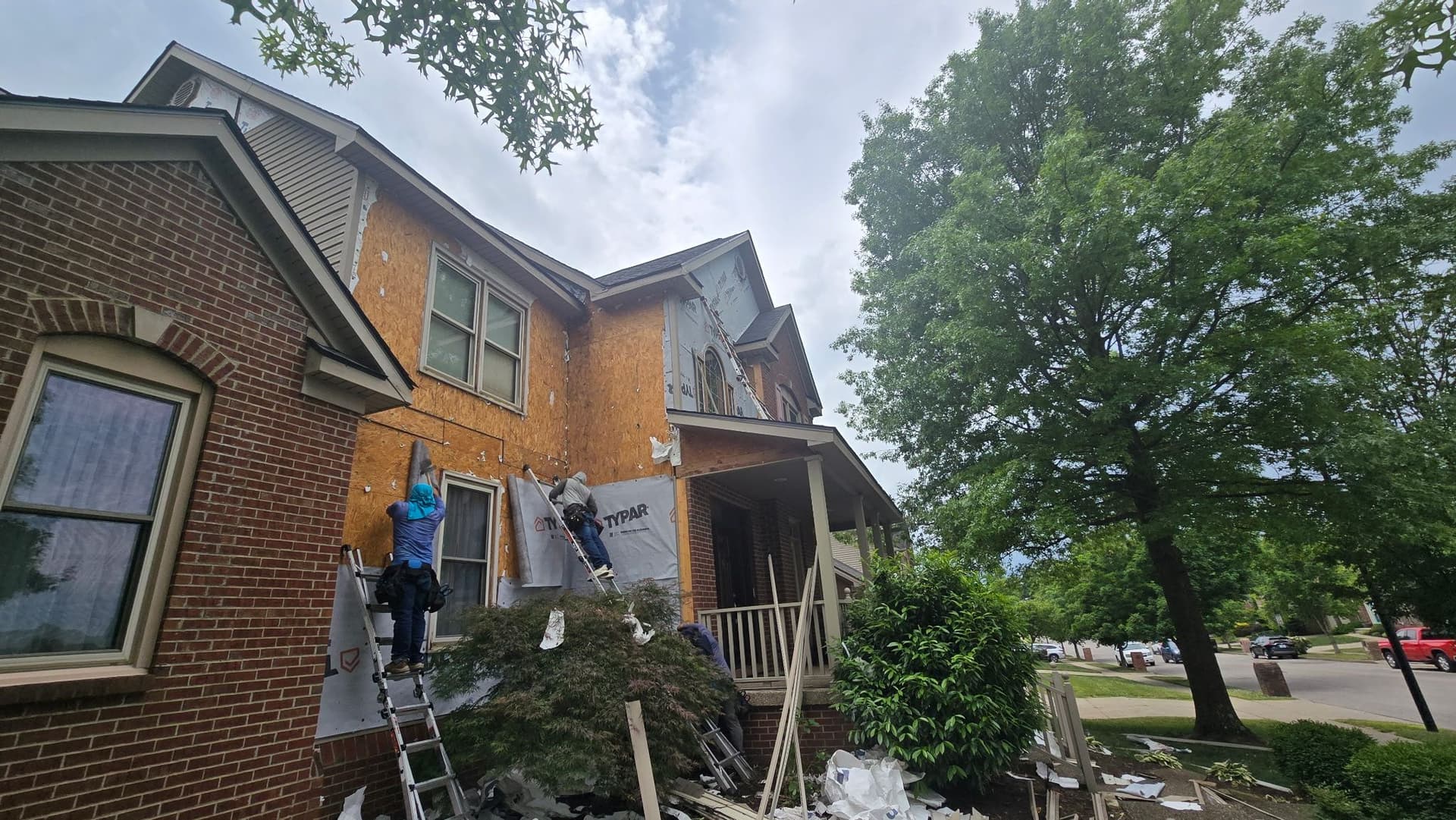
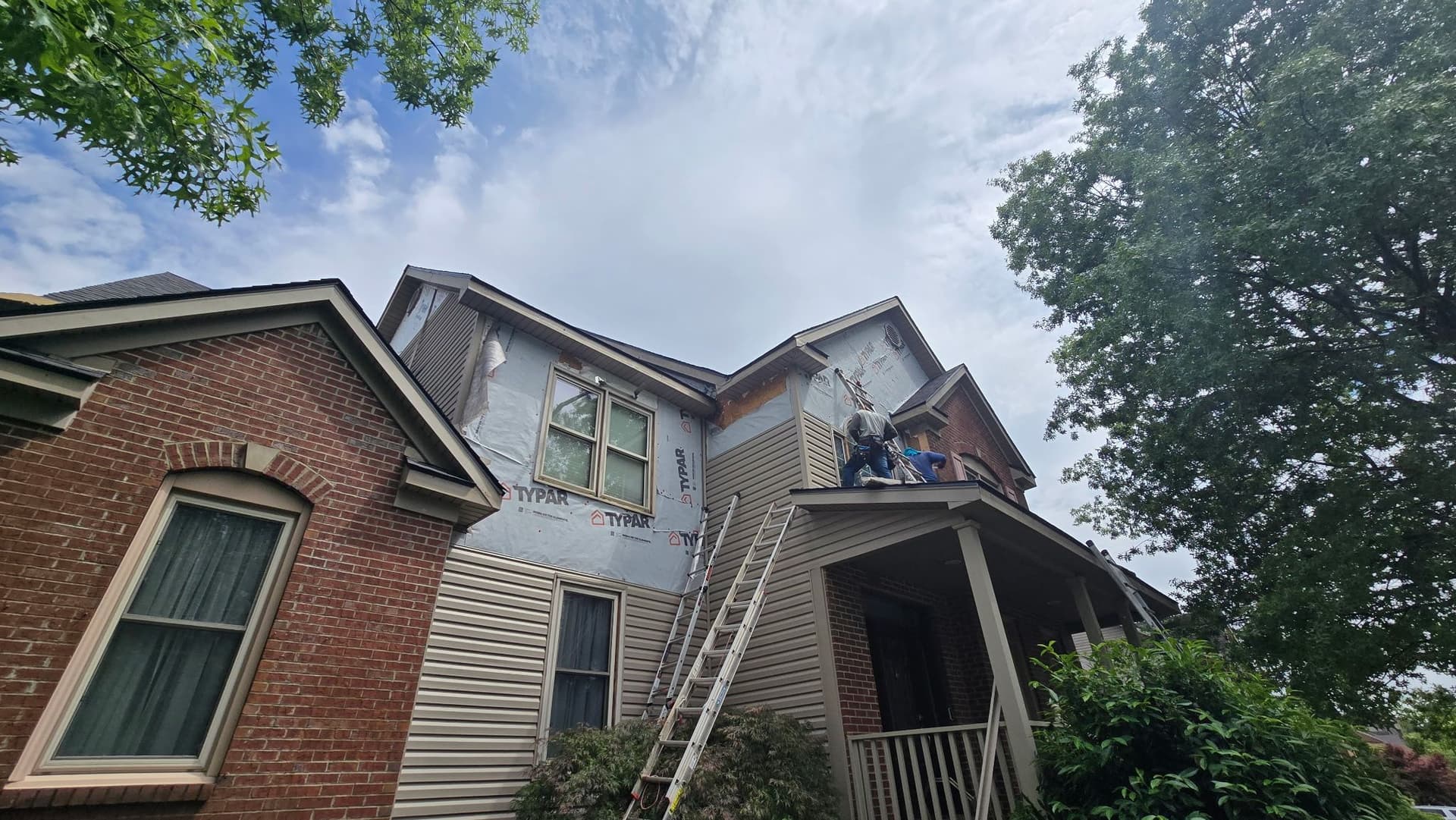
Once the wall is clean and prepped, house wrap goes on before anything else. We use Tyvek and Typar depending on the application - both are proven weather barriers that block moisture and air infiltration while still letting the wall breathe. It's a step that a lot of people never think about, but it plays a huge role in how long the finished siding actually lasts. Skip it or rush it, and you're setting the job up to fail down the road.
Getting this layer right - seams overlapped correctly, edges sealed around windows and corners - is what separates a lasting installation from one that starts showing problems in a few years. We take it seriously every single time. New siding over a properly wrapped wall performs the way it's supposed to: keeping wind and water out and protecting the structure underneath.
If your siding is showing its age, warping, cracking, or pulling away from the wall, it's worth getting it looked at sooner rather than later. What starts as a surface issue can turn into something more serious when water gets involved.