Copper Flashing That Protects Every Inch of Your Roofline
Most people never think about flashing until there's a leak. By then, water has already found its way in - and the damage that follows is rarely cheap to fix. Flashing is one of those details that does a lot of quiet, thankless work keeping your home protected.
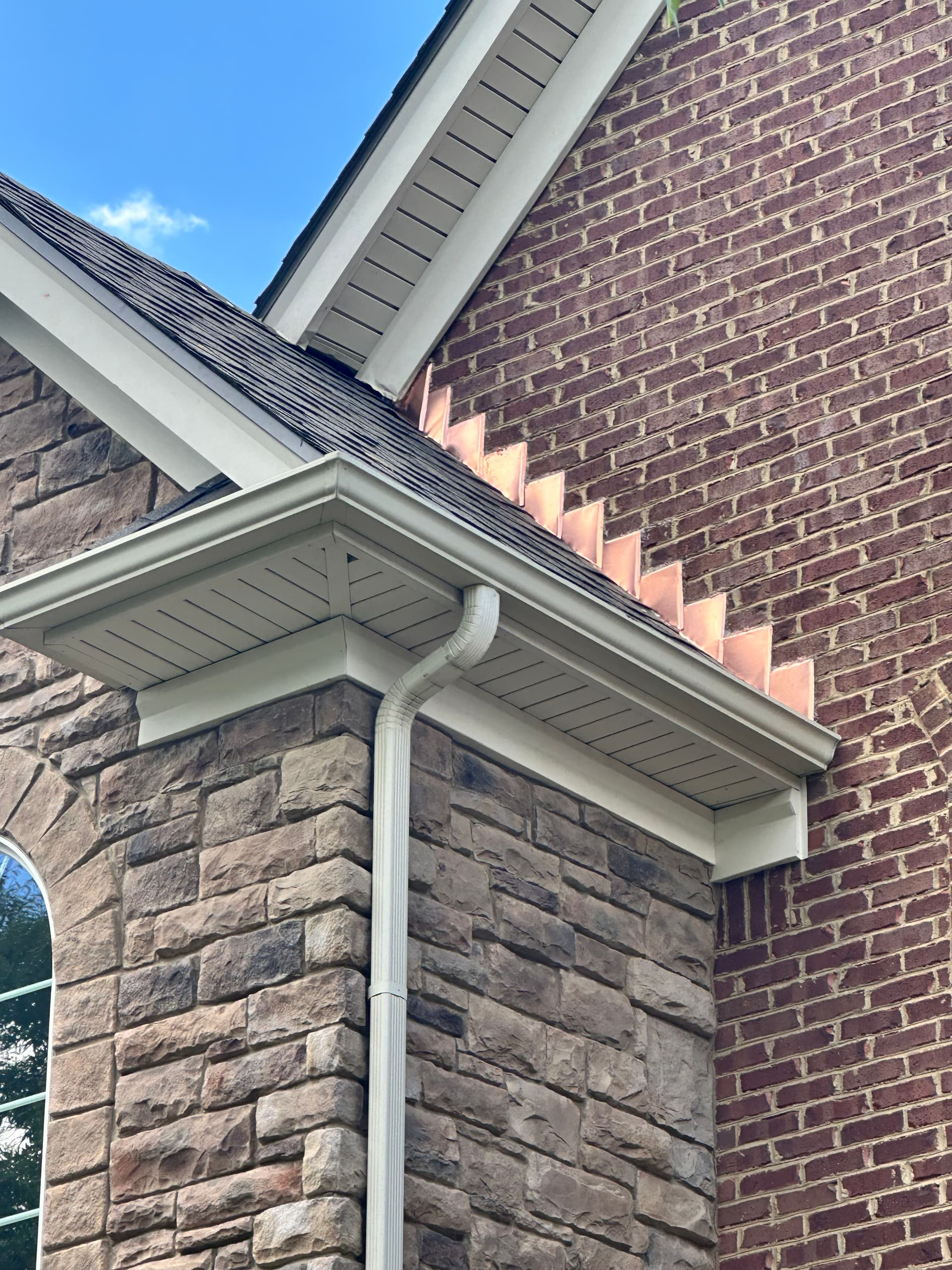
Here's what we were working with on this one. The roofline meets a brick wall at an angle - exactly the kind of junction where water wants to sneak in. Standard aluminum flashing gets the job done, but copper is a step above. It's more durable, it holds its shape longer, and it handles the freeze-thaw cycles that are hard on roofing materials in Kentucky.
What you're seeing along the roofline is step flashing done in copper - each piece layered in with the shingles, creating a tight barrier at the wall. It's not just slapped on top. It's built into the roof itself, which is how it's supposed to be done. That attention to the installation process is what separates a roof that holds up from one that gives you problems down the road.
We paired the copper flashing with clean white gutters and a downspout that runs straight and tight against the stone column. When all of it comes together - the flashing, the gutters, the downspout - the whole system works the way it should. Water gets picked up at the roofline and moved away from the foundation without any gaps in the process.
The copper will develop a natural patina over time, which honestly only adds to the look on a home like this. But more importantly, it's going to keep doing its job for decades. That's the kind of detail we take seriously on every roof we work on.